EMERGENCY SERVICE
(716) 253-1527
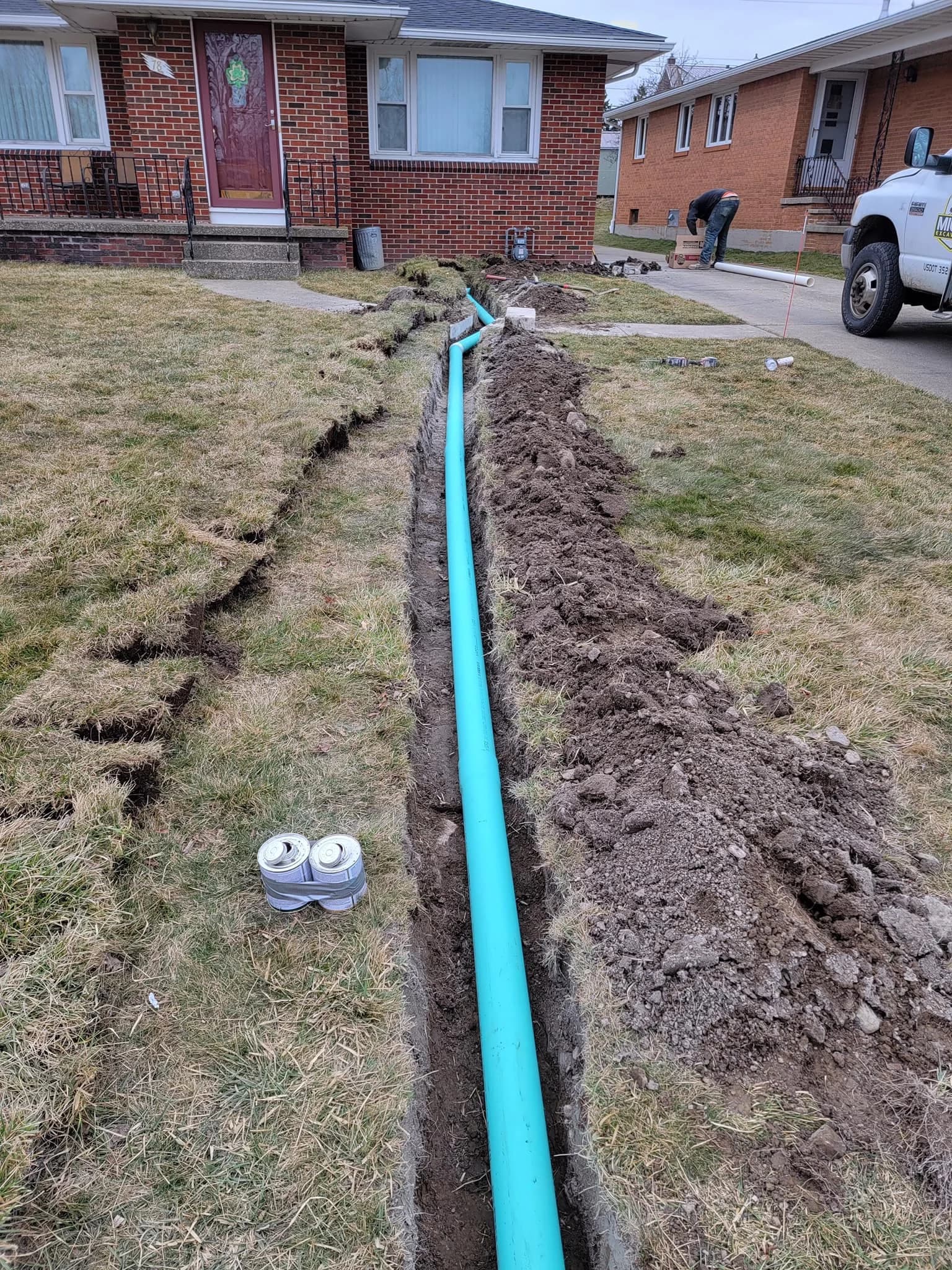
PVC sewer line installation toward brick house in Buffalo front yard
Basement backups, wet yards, water-line trouble, drainage problems, and excavation on tight lots

Buffalo, NY Sewer, Water Line, Drainage & Excavation

If you're in Buffalo, South Buffalo, Lackawanna, or Blasdell and dealing with a basement backup, water coming in, low water pressure, or a yard that stays wet, tell us what you've noticed. We can look at the line and property, then explain what kind of sewer, water-line, drainage, or excavation work may be needed.

Last updated August 17, 2026
Core places covered

Serving Buffalo, South Buffalo, Lackawanna, and Blasdell.

Quick answer

We provide sewer line repair, water line repair, drain cleaning and diagnostics, stormwater drainage, downspout drainage, French drain installation, and excavation throughout Buffalo, South Buffalo, Lackawanna, and Blasdell. We look at the sewer line, water service, access, and drainage around the property before recommending work.

Best for

Older homes and tight lots where a backup, wet basement, or water-service problem needs a closer look before any digging begins.

Common issues

Basement backups, drains that keep clogging, wet foundation walls, roof runoff, low pressure, rusty water, soft spots in the yard, and buried lines that are hard to reach.

How we can help

We can look at the line and property, handle the underground work, and restore the area afterward.

Underground help across Buffalo, South Buffalo, Lackawanna, and Blasdell

An underground problem can look different from one property to the next. Many homes and buried lines are older, access can be tight, and water does not always move where you expect it to.

We handle sewer repair, water-line work, drainage, drain diagnosis, and excavation across this part of Erie County. Before recommending work, we look at where the problem may be starting.

A wet basement is not always a sewer issue, and a backup is not always just a clog. Checking the source first helps avoid work that will not solve the problem.

One symptom can have more than one cause

Basement water, repeat backups, older water services, and tight access can look connected even when they are not. We look at the line, the property, and how water moves before recommending a repair.

Buffalo
South Buffalo
Lackawanna
Blasdell

Buffalo Area underground work across older homes and tighter lots

Recent excavation, buried-line, and drainage work from properties around Buffalo, South Buffalo, Lackawanna, and Blasdell.

1 / 5

New concrete foundation with waterproofing membrane in Buffalo side yard

Buffalo Area Problems by Community

The cause can differ from one property to the next, even when the symptoms look similar.

AreaCommon issue patternServices that may help
Buffalobackups after rain, older laterals, paved lots, and tight accesssewer camera inspection, drain cleaning, and sewer line repair
South Buffalocreek-area water, basement seepage, and storm runoff near foundationsdownspout drainage, French drains, and stormwater drainage
Lackawannarepeat clogs and possible problems with the property's sewer linedrain cleaning, sewer camera inspection, and sewer line repair
Blasdelltight village lots, runoff control, and limited room to workcompact excavation, downspout drainage, and stormwater drainage
Buffalo Area service guide

Buffalo

In Buffalo, a wet basement and a slow main drain can be connected. Older buried lines, paved yards, sidewalks, and stormwater all crowd the same small lot. After a hard rain or thaw, the first sign is often a backup at the lowest drain or water showing up near the foundation.

Buffalo: backups after rain and older laterals

More than one drain slows down, gurgles, or backs up after heavy rain
Water shows up in the basement even after the visible clog is cleared
Low pressure, rusty water, or soft ground points toward an older water service

Why this happens here

Buffalo has a combined sewer and stormwater challenge, and many homes sit on older city lots with limited access. From the basement, sewer and drainage problems can look similar. The buried line may be damaged, runoff may be moving toward the house, or both may be contributing.

When the main line needs a closer look

We check the main line before recommending a repair. If the camera shows roots, a belly, a break, or a collapsed section, sewer line repair may be needed. If the pipe is still usable, drain cleaning may be enough to restore flow.
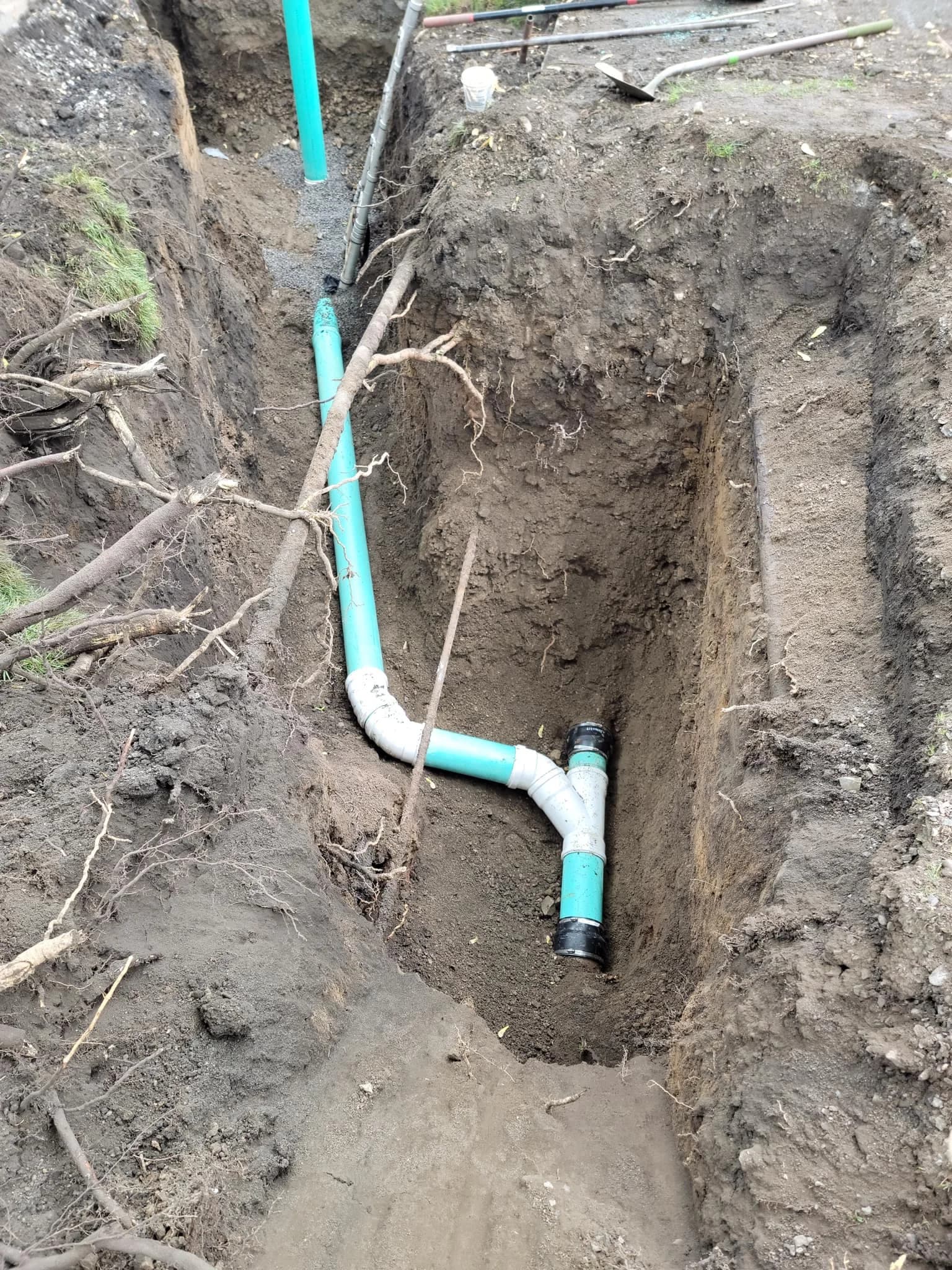
Deep Buffalo trench showing PVC wye fitting and exposed tree roots
Local evidence

Buffalo Sewer explains that rain and snowmelt run across roofs, streets, driveways, and parking lots before entering the city sewer system. During wet weather, that extra water can overload combined sewers. A basement backup after rain may involve both the sewer line and the way runoff moves around the property.

Source: Rain Check Buffalo
Buffalo Area service guide

South Buffalo

South Buffalo homes deal with water from a few directions. Cazenovia Creek, the Buffalo River, older neighborhood streets, and heavy storms can all affect what happens around the foundation. A floor drain backing up after rain does not always mean the same thing as seepage through a wall.

South Buffalo: creek-area water and basement seepage

Basement seepage comes back after rain, snowmelt, or high water near creek areas
Downspouts, patios, driveways, or grading send runoff back toward the house
Several fixtures act up during storms, which can point back to the main line

Why this happens here

Older blocks near creek and river corridors can get saturated quickly during thaw and heavy rain. It may look like a sewer problem, but roof runoff, grading, foundation drainage, or an older lateral can cause similar signs in the basement.

Where the water is coming from

We first look at where the water appears before deciding whether digging is needed. If roof runoff is collecting near the foundation, downspout drainage may help. If groundwater is moving through the soil, a French drain or stormwater drainage system may be the better way to move it away from the house.

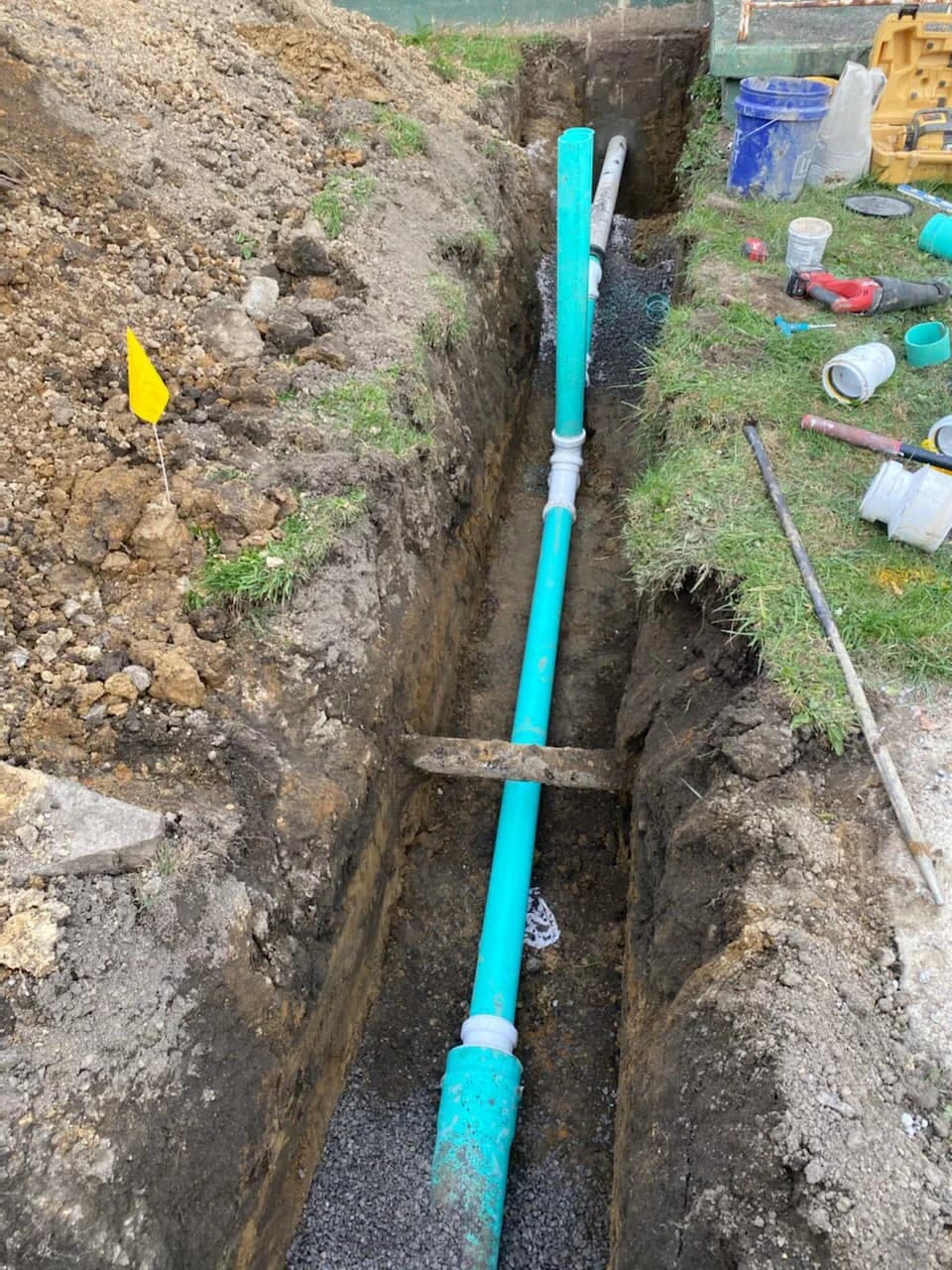
Green PVC sewer with cleanouts and flag in South Buffalo yard trench
Local evidence

A U.S. Army Corps research report describes Cazenovia Creek ice-jam flooding in Buffalo and nearby West Seneca during winter and spring thaws. For homes near the creek corridor, thaw and heavy rain can make basement water feel like a plumbing issue even when runoff and groundwater are part of the story.

Source: Cazenovia Creek flood study
Buffalo Area service guide

Lackawanna

In Lackawanna, the first question is whether the problem is in your property's sewer line, the water service, or the way water moves around the house. Checking the source first helps avoid digging in the wrong place.

Lackawanna: repeat clogs and sewer-line problems

The same clog comes back, or several fixtures slow down together
Low pressure, rusty water, or wet ground points toward a buried water-service issue
Roof runoff, foundation drains, or yard water may be tied into the wrong place

Why this happens here

Lackawanna code makes owners responsible for maintaining the building sewer and confirming where the problem is before work reaches the public right-of-way. The city also restricts roof runoff, foundation drains, and groundwater from sanitary sewers. That is why the source and location of the problem need to be confirmed before work begins.

Whether the line is clogged or damaged

We check whether the line can be cleared or whether the building sewer is damaged. A recurring clog may need drain cleaning, while a camera inspection can show when sewer line repair is needed.

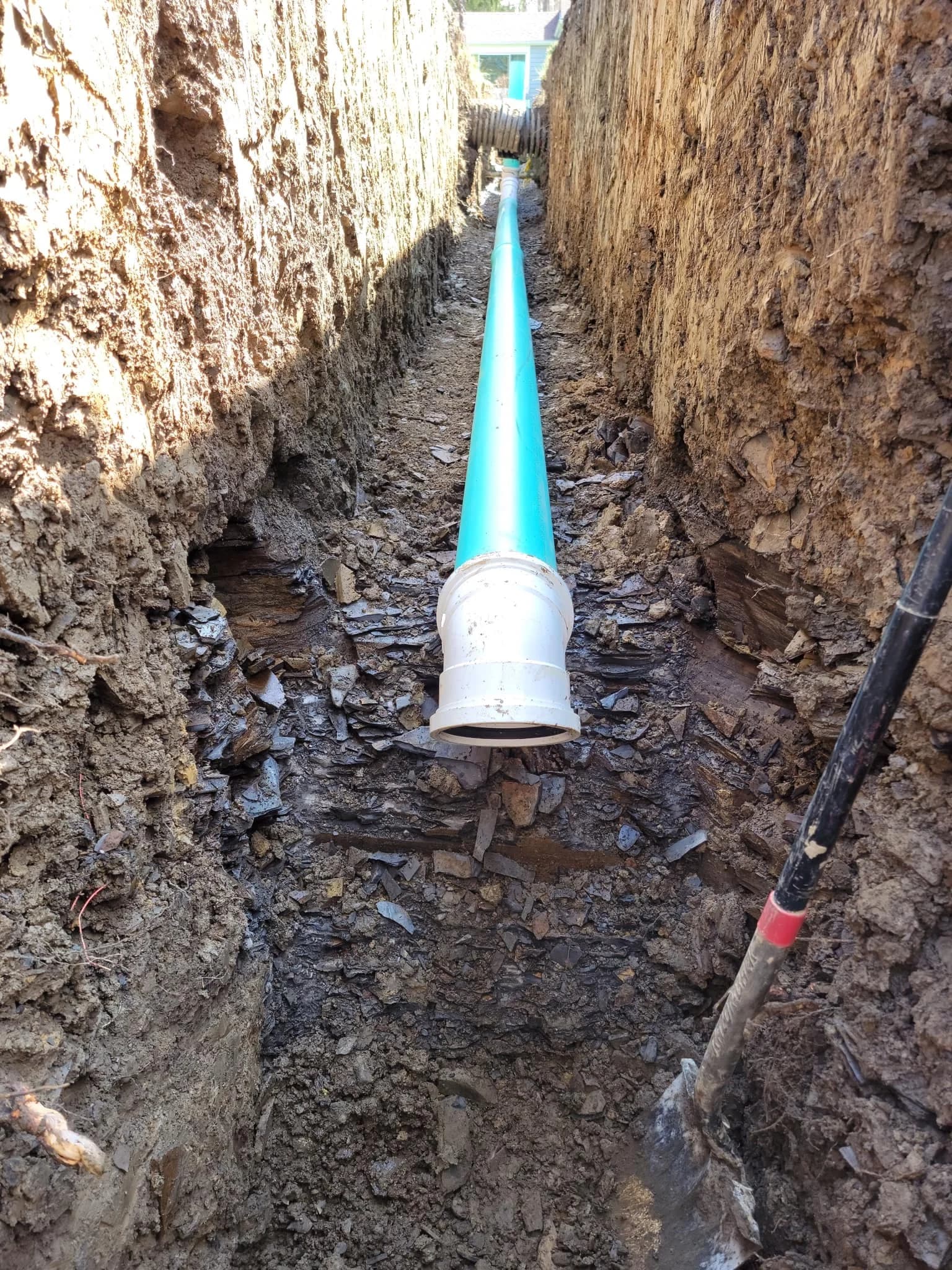
New PVC sewer with cleanout in deep Lackawanna yard trench with shovel
Local evidence

Lackawanna code says owners are responsible for maintaining the building sewer and must confirm where the problem is before work is done in the public right-of-way. It also bars roof downspouts, exterior foundation drains, surface runoff, and groundwater from being tied into a sanitary sewer.

Source: Lackawanna sewer code
Buffalo Area service guide

Blasdell

Many Blasdell properties have limited room for equipment and trenching. Close property lines and stormwater rules make careful planning important. If water is moving toward the house, the drainage route needs to move it away without sending it into the sanitary sewer.

Blasdell: tight lots and runoff control

A sewer or water line problem leaves little room for equipment or trenching
Roof runoff, surface water, or groundwater keeps moving toward the foundation
Older buried utilities need repair without tearing up more of the lot than necessary

Why this happens here

Blasdell village rules restrict stormwater, surface water, groundwater, roof runoff, and exterior foundation drains from entering the sanitary sewer without approval. Water still needs an allowed route, and on a smaller lot the drainage path and access need careful planning.

Planning around a smaller lot

We plan the work around the available access, nearby structures, buried utilities, and the area that will need restoration. On a smaller Blasdell lot, that may mean compact excavation for drainage work, downspout drainage, or a stormwater route that moves water away from the foundation.

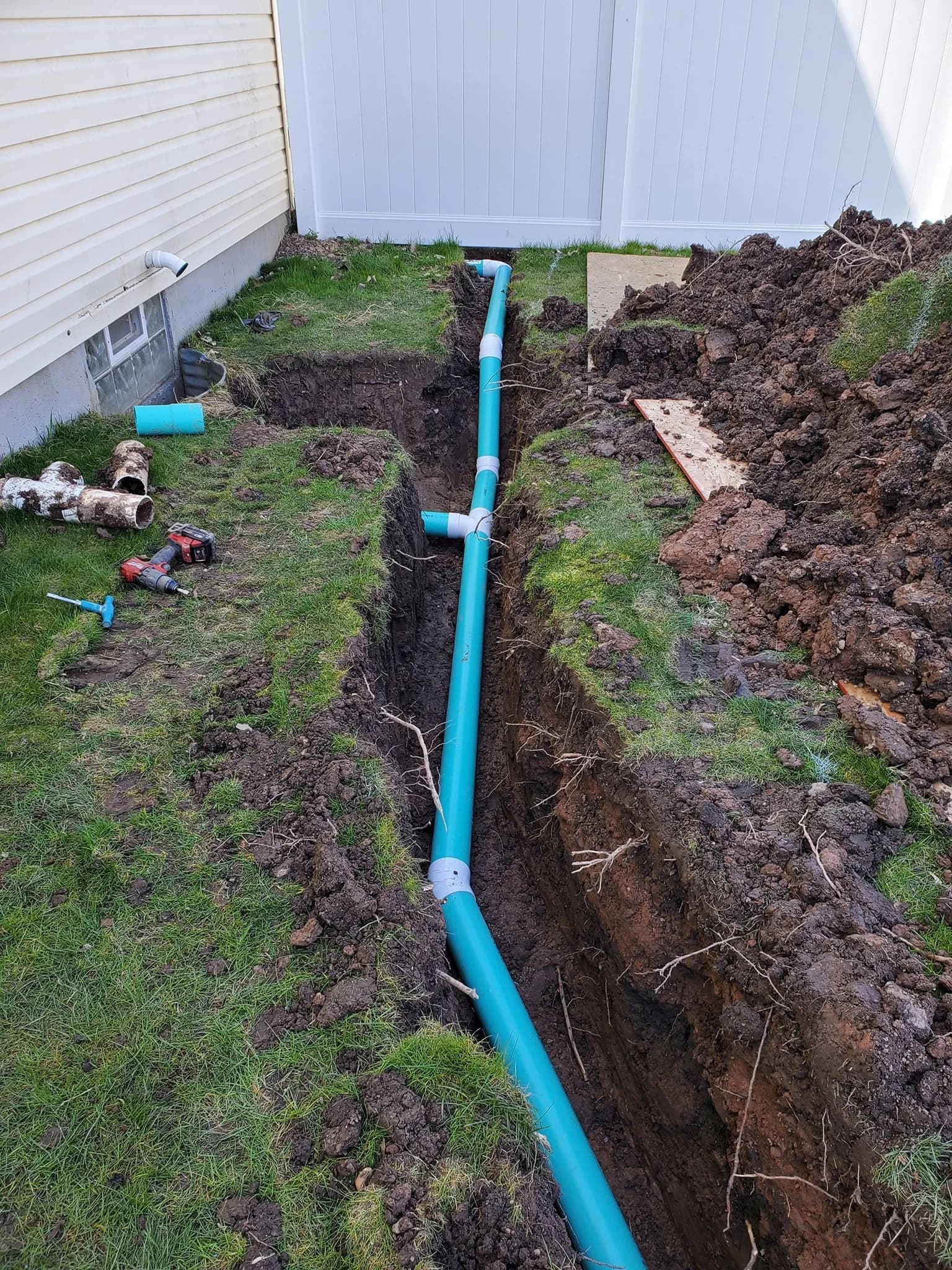
PVC sewer with T-junction and drill in Blasdell foundation trench
Local evidence

Blasdell rules restrict stormwater, surface water, groundwater, roof runoff, and subsurface drainage from entering the village sanitary system unless the village approves it. Small-lot drainage has to move water away from the house and into an allowed outlet.

Source: Blasdell sewer code
Not sure which service fits?

Tell us what is happening at your property

If your Buffalo Area property has a backup, wet basement, low pressure, or runoff that keeps coming back, call while the details are fresh.

Call now

How we look for the source of the problem

We look at the symptoms and property before recommending digging, a repair, or a drainage system.

1

Start with what you have noticed

We start with what you've noticed, such as the lowest drain backing up, a wet wall, soft ground, low water pressure, an odor, or water that appears after rain.

2

Check the line and water path

If the signs point underground, we check the line and how water is moving around the property to see whether the problem involves the sewer, runoff, or groundwater.

3

Explain what makes sense next

Once we understand the likely source, we explain whether the property may need cleaning, sewer repair, water-line work, drainage, or excavation.

Symptoms That Point to the Right Fix

Start with what you can see. A backup, wet wall, soft ground, or rusty water gives us a useful place to begin.

Several drains slow down at once

That usually points to a main-line problem rather than one clogged sink. We can check whether the line needs cleaning, a camera inspection, or repair.

Water comes in after rain or snowmelt

That often points to runoff, grading, or foundation drainage. If drain symptoms show up at the same time, the sewer line may need a closer look too.

Water pressure drops or rusty water appears

Those symptoms can point to an older buried water service. If the service has failed, we can expose the line and repair or replace the damaged section.

There is barely room to dig

Tight access changes the job. The excavation plan has to account for the driveway, sidewalk, utilities, fence lines, and restoration.

What to tell us when you call

You do not need to know whether the job is sewer repair, drainage, water-line work, or excavation before you call. A few details help us understand where to start when we arrive.

Where the symptom shows up

Tell us if the problem is in the basement, yard, driveway, lowest drain, main line, water service, or near the foundation.

When it happens

Tell us whether the problem follows rain or snowmelt, keeps returning, or started with sudden pressure loss or a sewage odor.

What has already been tried

If the line was cleaned before, if you have a camera result, or if the issue keeps coming back, say that on the call. It can save time on the visit.

When to call now

When you should call right away

Sewage backing up through the lowest drain or tub
Multiple drains slowing down in an older house
Basement seepage after storms plus signs of sewer trouble
Low pressure or rusty water from an older service line
Wet spots, settling, or sewage odor near an underground route

Questions Buffalo Area Homeowners Ask

We provide sewer repair, water-line replacement, drainage work, drain diagnosis, sewer camera work, and excavation across Buffalo, South Buffalo, Lackawanna, and Blasdell.

Buffalo Area Customer Reviews

Real reviews from homeowners and businesses we've worked with across Erie County.

5.0-star reputation and real customer feedbackRead Google reviews
★★★★★

Meet Matt Millitello, a true craftsman. Knowledgeable, efficient, and reasonable. Thanks to his team, we now can call our house a home.

Rob M.

Sewer repair & plumbing

★★★★★

Millie Excavating was extremely helpful and quick with communication and getting the problem solved. Very affordable and easy to work with.

David C.

Sewer repair

★★★★★

We got multiple estimates and these guys explained everything clearly, gave us a fair price, and did the work exactly as promised.

Andrew M.

Sewer line repair

If the live review feed does not load on your device, use the Google reviews link above or call (716) 253-1527 and we'll walk you through recent project examples.

Need help with an underground problem in the Buffalo Area?

If you have a backup, wet basement, drainage trouble, low water pressure, or a buried line that may need excavation, call us and tell us what you have noticed. We can help figure out what makes sense next.

(716) 253-1527